
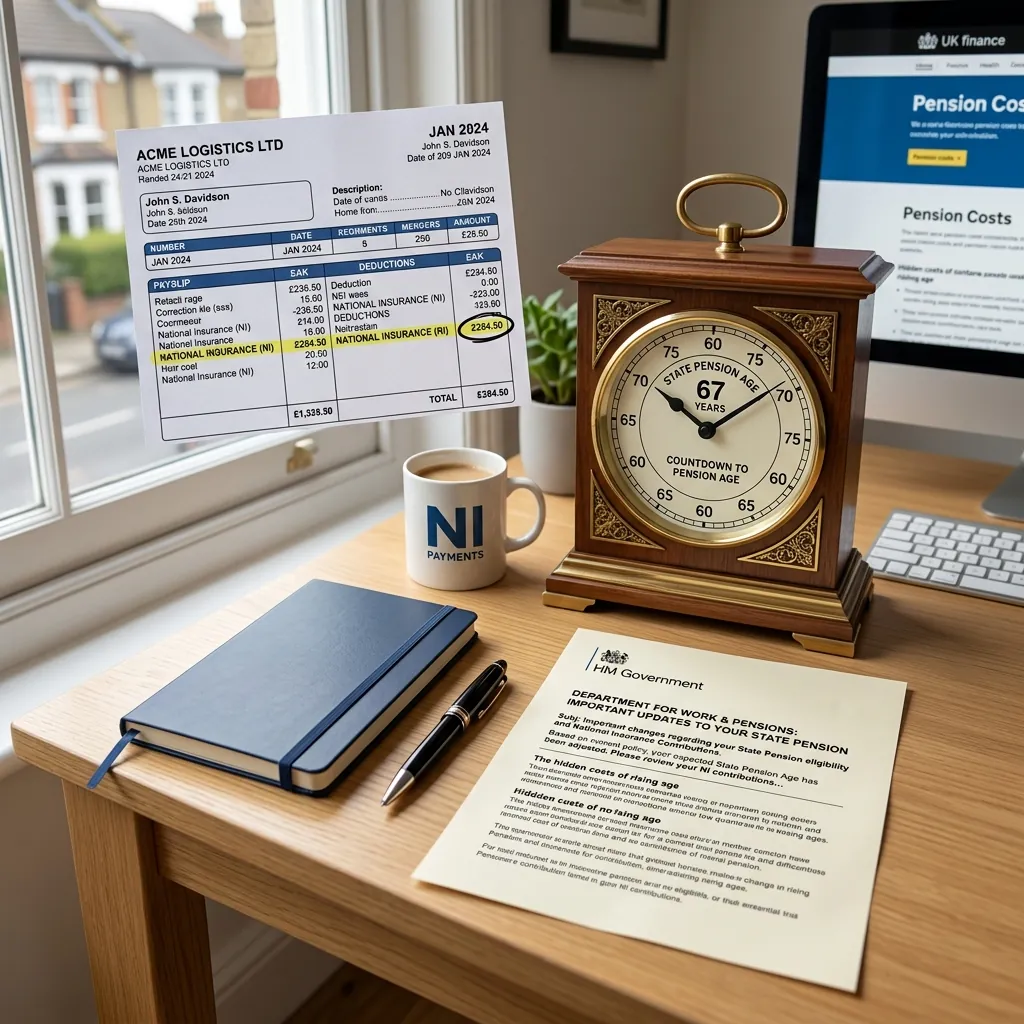
The goalposts for retirement are moving again, and this time, it could cost you thousands. As of April 2026, the UK state pension age has begun its phased increase to 67 — a move designed to rein in the ballooning £146 billion cost of the benefit. But while the headlines focus on working longer, the hidden sting lies in the extra National Insurance (NI) contributions you will be forced to pay.
The Hidden Cost of Working Longer
The most immediate impact of the rising state pension age is not just waiting longer for your payout — it's the extra year of National Insurance contributions you'll have to make. Even if you have already accrued the 35 years required for a full state pension, the law dictates that you must continue paying NI until you officially reach state pension age.
For a worker earning £50,000, this extra year will cost an additional £3,016 in NI contributions. For those on a £100,000 salary, the bill rises to over £4,000. Employers are not spared either, facing extra costs of up to £14,250 for higher earners.
This creates a frustrating scenario for many: paying into a system you have already fully funded, simply because the finish line has been pushed back.
"You may have already built up your full 35-year NI record — but you'll still be legally required to keep paying until the new state pension age. That's the stealth blow most people haven't considered."
A Growing Strain on Public Finances
Why is the government making this move? The simple answer is demographics and cost. The state pension bill hit £146 billion in 2025–26, placing immense strain on public finances. According to The Money Charity, total UK personal debt reached £1,946.3 billion at the end of January 2026, while 48% of UK households have either no savings or less than £1,500.
With the state pension supporting 13.2 million recipients as of August 2025, the government argues that changes are necessary to keep the system sustainable. However, experts warn that without further reform, the state pension age could eventually hit 80.
How to Protect Your Retirement
If you were born on or after 6 April 1978, you face an even steeper climb — the pension age is set to rise to 68 between 2044 and 2046, meaning an extra two years of NI contributions. The key is proactive planning now:
- Don't rely solely on the state pension to fund your later years. Review your workplace or private pensions to understand your projected income.
- Maximise your ISA allowances and consider other investment vehicles to build a retirement pot you control — independent of the state pension age.
- Check your NI record via your Government Gateway account. If you have gaps, voluntary contributions may be worth considering.
- Consider bridging strategies — planning how to fund the gap between your chosen retirement date and your state pension age.
Let's cut through the noise.
At Think Break Consultancy, we don't sell financial products. We provide clear, hourly-rate guidance to help you navigate these complex changes and build a retirement plan that works for you.
Think clearly. Break through the jargon.
References
- Yahoo Finance UK / The Telegraph. "The £4,000 blow to workers from Britain's rising state pension age." 8 April 2026.
- The Money Charity. "The Money Statistics." March 2026.