
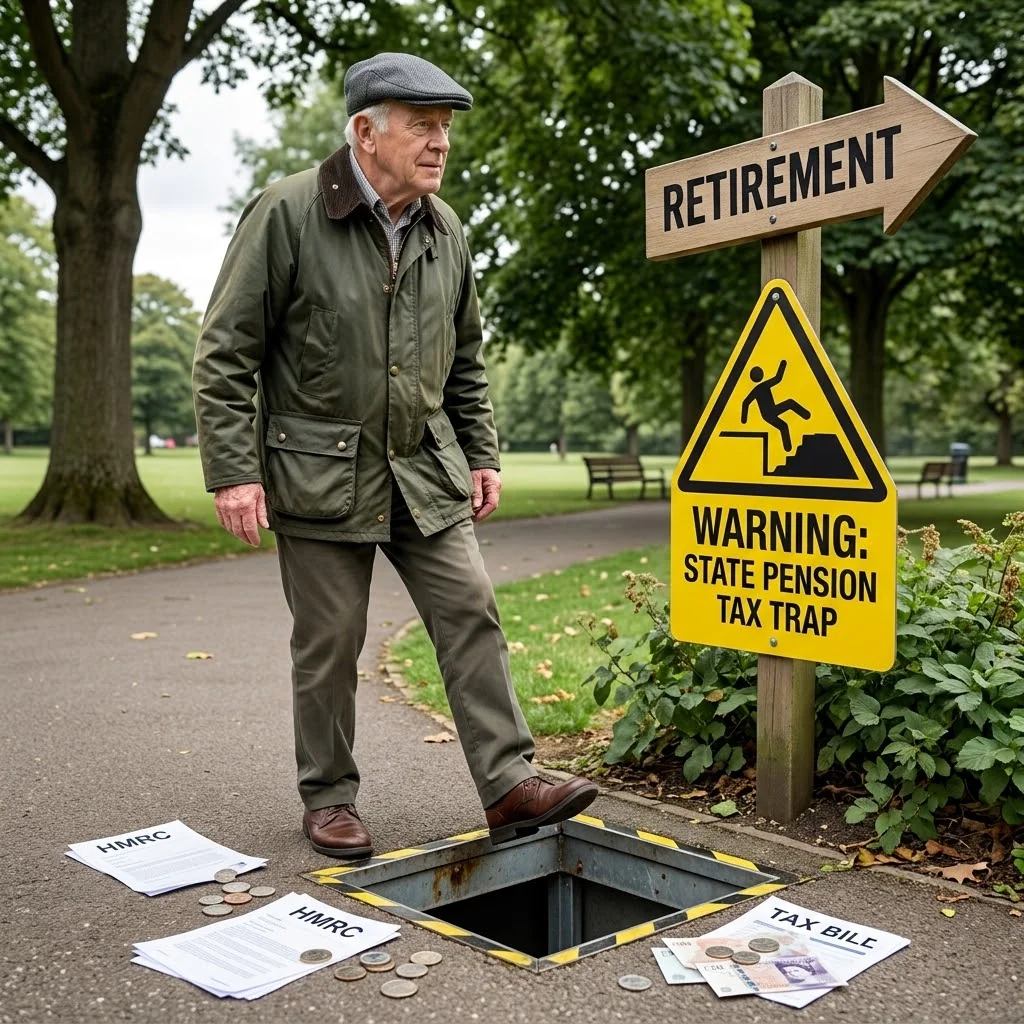
If you are approaching retirement or already drawing your State Pension, you may have seen recent headlines warning of a new “retirement tax.” That phrase is misleading: no new tax has been created. The State Pension has long counted as taxable income, even though it is normally paid without tax being deducted at source.
The underlying trend, however, is very real. HMRC estimates reported by Yahoo Finance UK suggest that 9.58 million people above State Pension age will pay income tax in 2026–27 — around 500,000 more than the previous year and 2.84 million more than in 2021–22.
The mechanics of fiscal drag
The main driver is fiscal drag. The standard Personal Allowance — the amount most people can receive before income tax becomes due — remains at £12,570. At the same time, the State Pension has risen under the triple lock, which increases it by the highest of earnings growth, inflation or 2.5 per cent.
For 2026–27, the full new State Pension is £241.30 a week, or £12,547.60 over 52 weeks. That leaves a margin of just £22.40 below the standard Personal Allowance. Even a small workplace pension, private pension, part-time salary or amount of taxable savings interest can therefore push someone into income tax.
Think clearly: The issue is not a new tax on retirement. It is the narrowing gap between a rising taxable State Pension and a frozen tax-free allowance.
Fact versus opinion: what the headlines miss
This Is Money describes the position as a “retirement tax” headache and highlights more than ten million over-65s paying income tax. That framing is attention-grabbing, but it mixes two different age definitions. The larger 10.2 million estimate covers people aged 65 and over, while the 9.58 million figure covers people above State Pension age. Those groups are not identical now that the State Pension age is moving from 66 towards 67.
It is also worth adding scale. The Money Charity reports that 13.2 million people were receiving a State Pension in August 2025. A large number of pensioners still do not pay income tax, particularly where the State Pension is their only or main income. The headline is therefore a warning to review your total taxable income — not evidence that every pensioner faces the same bill.
How to manage your tax exposure
The answer is measured planning rather than panic. Start by bringing together every source of taxable income: State Pension, defined-benefit pensions, withdrawals from defined-contribution pensions, earnings, rental income and taxable interest. Check the tax code attached to each source and make sure HMRC has not duplicated or omitted anything.
If you are still working, pension contributions may reduce the income on which tax is calculated, subject to the relevant rules and allowances. In retirement, the order and timing of withdrawals from pensions, ISAs and taxable accounts can affect the overall result. Couples may also have different unused allowances, although transfers and ownership changes should be considered carefully.
This is general guidance, not a recommendation to rearrange investments or pensions. Tax rules depend on individual circumstances and can change.
Ready to make your retirement income clearer?
Think Break provides objective, hourly-rate financial guidance. No product sales, no commission and no hidden agenda — just help understanding the moving parts and deciding what to check next.
Think clearly. Break through the jargon.
References
- Yahoo Finance UK. “Record 9.5 million pensioners to be hit with tax bills this year.” 15 July 2026.
- GOV.UK. “The new State Pension: What you’ll get.”
- This Is Money. “Seven in 10 pensioners now pay income tax…” (opinion-led reporting).
- The Money Charity. “The Money Statistics.” June 2026.